
Beverly Hills
Median $4,500,000+
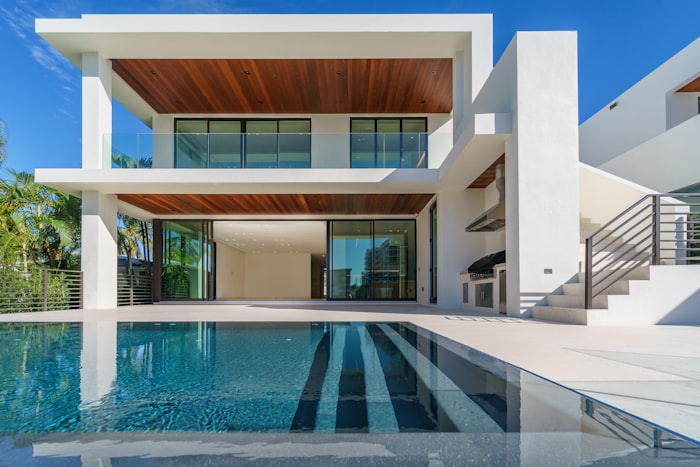
Bel Air
Median $5,200,000+
The two most prestigious addresses in Los Angeles compared.
Beverly Hills and Bel Air represent the two pinnacles of Los Angeles residential prestige, and yet they could not be more different in what they actually offer their residents. Beverly Hills is the iconic global address — the only American city whose name functions as a worldwide luxury brand, with a walkable retail spine on Rodeo Drive, a city government and police force that maintains a level of service tailored to its residents, and a housing stock that ranges from the famous flats north of Wilshire to the canyon estates above Sunset. Bel Air is the opposite of iconic — it is deliberately invisible. Gated, hilltop, geographically removed, Bel Air buyers actively choose discretion. Lots are larger, estates are more private, and the buyer pool is more concentrated among ultra-high-net-worth families, foreign investment buyers, and senior entertainment industry principals. Both are generational holds. Both clear $4.5M minimum. The decision between them is one of the clearest lifestyle filters in Los Angeles real estate.
Beverly Hills is technically its own city with its own school district, its own police, and its own zoning. The "Flats" (north of Wilshire, south of Sunset) contain the most famous addresses — wide tree-lined streets, lots from 8,000 to 15,000 square feet, and original 1920s Spanish, Tudor, and Mediterranean estates. Trousdale, the hillside neighborhood developed in the late 1950s and 1960s, has mid-century modern icons and contemporary glass-walled rebuilds. The condo corridor along Wilshire offers luxury high-rise inventory. Median starts at $4.5M and rises sharply — true trophy properties in Beverly Hills routinely close above $20M, and the top of the market in the Flats and Trousdale sets price records for the entire LA region. Days on market average 18 — fast, considering the price tier — driven by global buyer demand and the city's brand premium. The schools (Beverly Hills Unified) are excellent, the city services are exceptional, and the structural demand floor is essentially permanent.
Bel Air is what discreet wealth looks like in Los Angeles. The neighborhood sits in the hills north of Sunset, accessed by winding canyon roads and three gated entry points. Lots are substantially larger than Beverly Hills — frequently 1 to 5+ acres — and the architectural mix runs from preserved 1920s estates (the original Bel-Air vision was modeled on the Italian and French countryside) to contemporary glass mega-estates above Bel Air Road. Median is $5.2M and trophy property records in Bel Air rival or exceed Beverly Hills. Days on market average 22 — slower than Beverly Hills, because the buyer pool is smaller and more selective. Buyers actively select Bel Air for what it does not offer: no walkable village, no tourist photography on Rodeo Drive, no public recognition. The Bel Air Hotel anchors the limited commercial footprint. This is a neighborhood built for owners who want to disappear into their property.
Beverly Hills Unified School District — its own district, its own schools, consistently strong public education. Hawthorne Elementary, Beverly Vista Elementary, Beverly Hills High School. Strong private alternatives (Harvard-Westlake, Marlborough, Buckley) within 15 minutes.
LAUSD with limited public school presence within Bel Air itself. Buyers overwhelmingly enroll children in private schools: Harvard-Westlake, Brentwood School, Marlborough, John Thomas Dye. Public school is not typically a driver of Bel Air home selection.
Rodeo Drive, Beverly Hills Hotel, Polo Lounge, Spago, the Hammer Museum nearby. Walkability between the Flats, the Golden Triangle retail district, and the hotels. Strong restaurant and luxury retail concentration. Tourist-facing in some zones, which is part of the brand.
Bel Air Hotel as the cultural and dining anchor. No walkable retail district by design. Outdoor lifestyle centers on private property — pools, tennis courts, gardens. The Stone Canyon Reservoir and surrounding hiking trails offer the only meaningful outdoor public access.
Beverly Hills has one of the most architecturally significant housing stocks in the United States at any price point. The Flats north of Wilshire have preserved 1920s Spanish, Tudor, Mediterranean, and Georgian Revival estates by architects including Paul Williams, Roland Coate, and Wallace Neff. Trousdale has mid-century modern icons by John Lautner, A. Quincy Jones, and Hal Levitt, with contemporary glass-walled rebuilds increasingly common. The Wilshire Corridor offers luxury high-rise condo inventory in buildings like the Beverly West and the Carlyle. Renovation standards inside Beverly Hills proper are unusually high, with extensive city design review required for exterior modifications. Buyers at this tier should expect to engage architects, landscape designers, and interior specialists familiar with Beverly Hills permitting before committing on any rebuild.
Bel Air's architectural inventory is concentrated at the trophy end of the LA market. The original 1920s Bel-Air estates were modeled on Italian and French countryside villas — many remain on 1 to 5+ acre lots, in varying states of preservation and renovation. Mid-century modern is well-represented above Bel Air Road, with significant Richard Neutra and Pierre Koenig works in the neighborhood. The last two decades have brought contemporary mega-estates — glass, steel, and concrete builds at 20,000 to 50,000 square feet, many architecturally significant in their own right. The architectural variety means buyers can find preserved historic estates or new contemporary builds, but careful selection is essential because deferred maintenance on older estates can be substantial.
Beverly Hills' 18-day average days-on-market is unusually fast for the trophy tier, reflecting concentrated global buyer demand attracted by the iconic address. The market operates on multiple parallel tracks: Wilshire Corridor condos move on building-specific dynamics, the Flats trade on a smaller pool of qualified buyers, and Trousdale operates on mid-century specialist demand. Off-market activity through private broker networks is meaningful at the $10M+ tier. The strongest seasonal activity runs spring through early fall; year-end activity is driven by tax-motivated buyer and seller behavior. Buyers at this tier should expect extended due diligence cycles and significant property condition variance.
Bel Air's 22-day average days-on-market reflects a smaller and more selective buyer pool. The trophy tier in Bel Air ($10M+) operates almost entirely on off-market and private broker network activity, with multi-month due diligence cycles standard. Lower-tier inventory ($5M to $10M) moves more conventionally but still slower than Beverly Hills equivalents. The 5.8% YoY appreciation reflects capital preservation priorities at this tier rather than aggressive growth. Buyers should expect extensive inspection cycles, particularly for older estates with extensive infrastructure (pools, tennis courts, large gardens) that can carry substantial deferred maintenance.
Best fit: Buyers who want global brand recognition, walkable luxury, top-tier public schools, and a city government oriented around resident services. Often principals in entertainment, finance, and tech who appreciate visibility.
Best fit: Ultra-high-net-worth families prioritizing privacy, larger acreage, and discretion. Foreign investment buyers. Senior entertainment industry principals at career stages where visibility is no longer desired.
Investment thesis: At the trophy tier, both Beverly Hills and Bel Air function as capital preservation vehicles with appreciation in the 5 to 7% historical band — appreciation is less important than wealth preservation and the option value of liquidity. Beverly Hills offers stronger liquidity (faster days on market, larger global buyer pool) and meaningful school district value for family principals. Bel Air offers stronger privacy and larger lot value for principals at career stages where visibility is no longer desired. Specific property selection — architect, condition, lot, view — matters substantially more than neighborhood choice at this tier. Both have demonstrated resilience through every modern market cycle and serve as generational assets.
Beverly Hills for the iconic global address, walkable luxury, stronger public schools, and faster liquidity at the trophy tier. Bel Air for maximum privacy, larger lots, gated access, and ultra-discreet ownership. Both are generational assets with proven resilience through every modern market cycle. The $700K median gap is functionally meaningless at this tier — both neighborhoods have substantial price dispersion based on specific lot, view, architect, and updates. The decision is almost entirely lifestyle and visibility preference.
"At this price point, the difference between Beverly Hills and Bel Air is not really money — it is a lifestyle decision and a self-assessment about visibility. Beverly Hills buyers want their address to mean something to a stranger from anywhere in the world. Bel Air buyers actively do not want that — they want their address to mean nothing to anyone except the people they choose to invite. Both are correct answers for the right buyer. I know both markets intimately, and at this tier the right move is to walk specific properties with someone who can tell you which estates are genuinely well-built versus which are pretty wrappers around deferred maintenance. The trophy tier rewards careful selection and punishes assumption."
Talk to Anthony — Free →Bel Air has a slightly higher median at $5.2M+ versus Beverly Hills at $4.5M+, but both have substantial price dispersion. Trophy properties in either neighborhood routinely clear $20M, and the top of each market sets price records for the LA region.
Beverly Hills, decisively, for public education. Beverly Hills Unified is its own district with excellent public schools. Bel Air buyers typically enroll children in private schools (Harvard-Westlake, Brentwood School, John Thomas Dye) regardless of public options.
Bel Air is structurally more private. The neighborhood is gated, lots are larger (often 1 to 5+ acres), and the geography (canyon roads, hilltop access) makes casual visibility nearly impossible. Beverly Hills offers privacy on specific streets but is fundamentally a walkable urban neighborhood.
Beverly Hills is appreciating slightly faster at 6.2% YoY versus Bel Air at 5.8%. Both are within the stable trophy-tier appreciation band rather than the explosive Silicon Beach pattern. Trophy markets prioritize capital preservation over rapid percentage gains.
Beverly Hills averages 18 days, Bel Air averages 22 days. The faster Beverly Hills market reflects a larger global buyer pool drawn by the iconic address. Bel Air's slower average reflects a smaller, more selective buyer pool and longer due diligence cycles at this tier.
Both have excellent resale fundamentals over 10+ year holds, but for different buyer pools. Beverly Hills appeals to global recognition buyers; Bel Air appeals to discretion-focused buyers. Specific property selection (lot, architect, condition) matters far more than neighborhood at this tier.
Beverly Hills and Bel Air are both peak LA residential addresses, and both serve fundamentally different buyer profiles. The decision is not financial — at this tier, the price gap is meaningless against the property selection variables. The decision is a self-assessment about how you want to live: walkable versus gated, recognized versus discreet, urban versus removed, public school district versus private school only. Both are generational assets with proven resilience. The most important variable is property-specific: which estate, which architect, which condition, which lot. At this tier, walking properties with a broker who has closed at the trophy level in both markets is essential. Reach out for a free strategy conversation tailored to your specific objectives.